How To Identify And Treat Red Mite Infestation In Chickens
Red mite in chickens can be hard to spot because the mites usually hide in the coop during the day and feed on hens at night. Left unchecked, they can cause irritation, stress, reduced laying and, in severe cases, anaemia. With regular coop checks, quick action and a sensible cleaning routine, red mite is much easier to control.
Key takeaways
- Red mites usually hide in the coop, not permanently on the chicken.
- They feed at night, so a daytime check of the bird may not reveal the problem.
- Pale combs, restless hens, feather pecking and reluctance to enter the coop can all be warning signs.
- Perch ends, nest box corners, cracks, crevices and felt roofing are common hiding places.
- Treating the coop is essential, as treating only the hens is unlikely to solve the problem.
- Severe infestations can make chickens weak or anaemic, so contact a poultry vet if a bird seems unwell.
What are red mites?
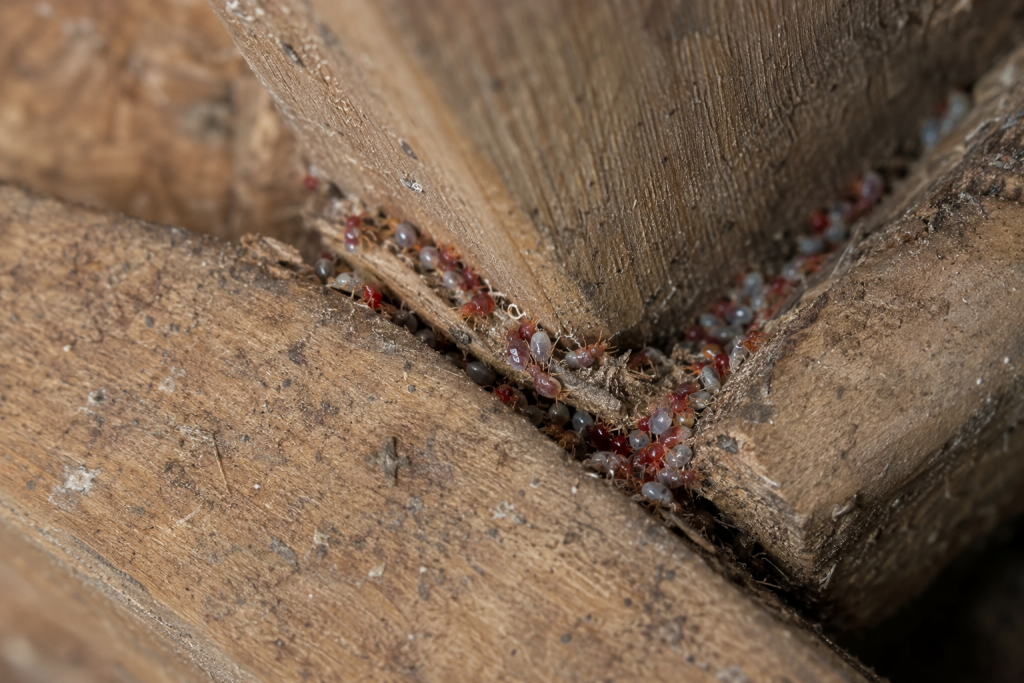
Red mites, properly known as Dermanyssus gallinae, are tiny blood-feeding parasites that affect chickens and other birds. Despite the name, they are not always red. Before feeding, they may look pale grey, brownish or yellowish. After feeding on blood, they become red or darker in colour.
They are very small, usually around 1mm, which makes them easy to miss unless you are looking carefully. They are also nocturnal, which is one of the reasons they cause so much trouble for chicken keepers.
Unlike some parasites, red mites do not usually live on the bird all the time. They hide in the chicken coop during the day, then come out at night while the hens are roosting. After feeding, they retreat back into cracks, joints, perch ends, nest boxes, roof spaces and other dark areas.
That is why I always think of red mite as a coop problem first. You can check a hen in daylight and see very little, yet still have mites tucked away in the house waiting for nightfall.
Why red mite is a serious problem
A few red mites may cause irritation and restlessness. A heavy infestation can be much more serious.
Because red mites feed on blood, repeated feeding can leave chickens stressed, itchy and uncomfortable. In larger numbers, they can contribute to anaemia, pale combs, weakness, reduced egg laying and general poor condition. Young birds, older hens and chickens that are already under the weather may struggle more.
A red mite problem can also build quickly, especially in warm weather. The current live version of this post correctly notes that red mites can reproduce quickly and become a much larger infestation in a short period. That is one of the reasons early checks matter so much.
In practice, the first sign is often not a mite crawling across the bird. It may be a hen that does not want to go into the coop, a flock that seems restless at dusk, or birds that suddenly look tired and out of sorts.
Signs of red mite in chickens
The signs of red mite are not always dramatic at first. Sometimes the hens continue eating and moving around, while the problem builds in the coop.
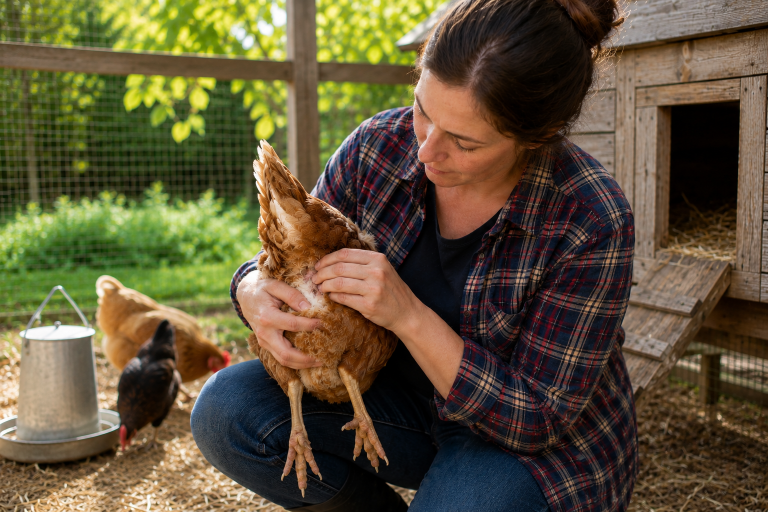
Look out for pale combs and wattles, lethargy, weakness, reduced laying, feather pecking, increased scratching, restlessness at night, hens avoiding the coop, or birds trying to roost somewhere unusual. You may also notice eggs being laid outside the nest box if hens are reluctant to use areas where mites are hiding.
The coop itself may show clues too. You might see tiny moving specks around perch ends, reddish-brown smears on woodwork, greyish dust in cracks, or clusters of mites tucked into joins and corners.
One sign I take seriously is a sudden change in bedtime behaviour. Chickens like routine. If hens that normally put themselves to bed start hanging back outside the coop, I would check for red mite before assuming they are being awkward.
Symptoms of red mite infestation in chickens
Signs your chickens may be affected include:
- Pale comb and wattles
- Lethargy or weakness
- Loss of appetite
- Feather plucking or over-grooming
- Reluctance to enteHow to check for red mite
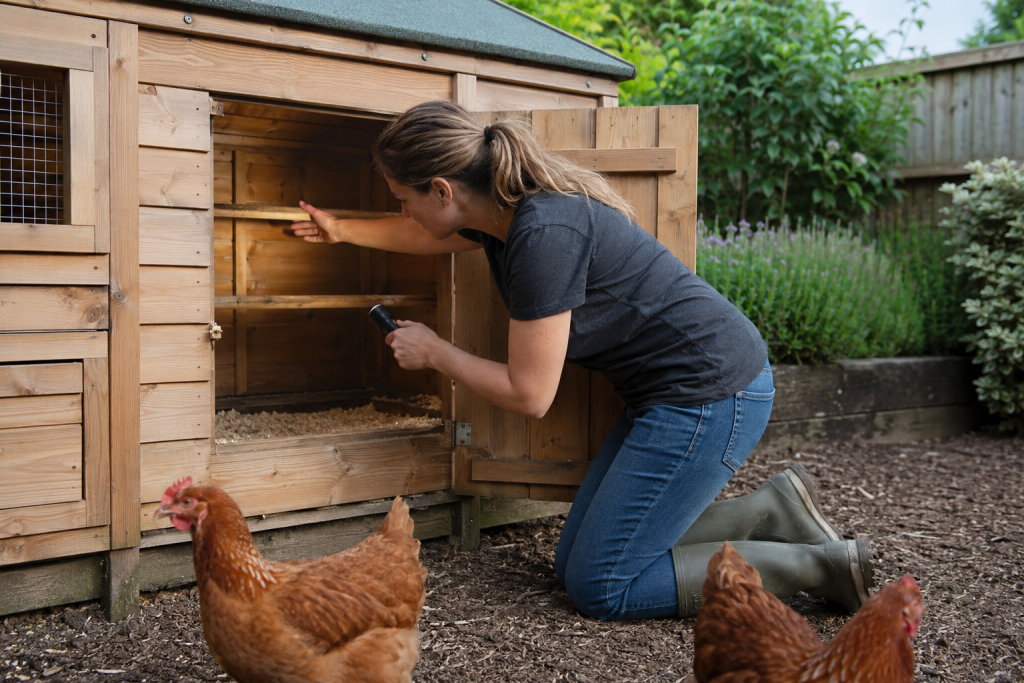
- The best time to check for red mite is after dark, when the mites are more active. Take a torch and inspect the coop carefully, especially around perch ends, nest box corners, cracks, joints, roof edges and any removable fittings.
- A simple tissue test can help. Wipe a white tissue or piece of kitchen roll along the underside of perches and into crevices. If you see red or brown smears, that may be crushed, blood-fed mites. You may also see tiny specks moving when the torchlight catches them.
- During the day, look for greyish dust, dirty-looking residue or clusters of tiny mites in hidden areas. Pay particular attention to the ends of perches and anywhere wood meets wood.
- If your coop has felt roofing, inspect it carefully. Felt can give red mite places to hide, and if mites get underneath it, they can be very difficult to reach. This is one of the useful practical points from the existing post and it is worth keeping.
Where red mites hide in a chicken coop
Red mites love small, dark, protected spaces. That is what makes them so frustrating.
They often hide in perch sockets, cracks in timber, screw holes, nest box joins, removable tray edges, roof gaps, hinges, corners and under felt. In wooden coops, rough joints and small crevices can give them plenty of shelter. Plastic coops may be easier to clean, but they are not immune. Mites can still hide around fittings, seams and removable parts.
I always find it helps to take the coop apart as much as possible when checking. If the perches lift out, lift them out. If the nest boxes can be removed, remove them. The mites are often not sitting politely in the middle of a visible surface. They are in the awkward bits.
Red mite, northern fowl mite and scaly leg mite
It is useful to separate red mite from other mite problems because the signs and control methods are not identical.
Red mite usually hides in the coop and feeds at night. Northern fowl mite tends to live more directly on the bird, often around the vent area. Scaly leg mite affects the legs and causes raised, crusty scales.
If you find mites in perch ends and coop crevices after dark, red mite is the likely suspect. If you see dirty-looking build-up around the vent area, northern fowl mite may be involved. If the legs look crusty, raised or thickened, check for scaly leg mite.
If you are not sure which parasite you are dealing with, or if the hen looks unwell, it is worth asking a poultry vet for advice. For more information, read my post: Mites On Chickens: How To Spot, Treat And Prevent Them
What to do if you find red mite
If you find red mite, act quickly but do not panic. The aim is to reduce the mite population, protect the hens and make the coop harder for mites to live in.
Start by removing bedding and clearing the coop thoroughly. Take out removable perches, nest box parts, trays, feeders and drinkers. Dispose of old bedding carefully, especially if the infestation is heavy.
Then clean the coop properly, paying close attention to perch ends, nest boxes, cracks, corners and roof joins. A quick tidy-up will not be enough if mites are hiding deep in the structure. Scrub or hose down surfaces where appropriate and allow the coop to dry as much as possible before applying any poultry-safe treatment.
Use a red mite product that is suitable for chickens and follow the label exactly. Some products are intended for the coop, some are intended for the birds, and some have specific rules around laying hens, repeat use and egg withdrawal. Do not guess, especially if your hens are laying.
If the birds themselves are affected, use only products that are suitable for poultry. Avoid household insecticides or anything not intended for chickens. More product does not mean better treatment. The right product, used correctly, is safer and more effective.
Why one clean is rarely enough
One of the biggest mistakes with red mite is cleaning once and assuming the problem has gone.
Red mites can hide deeply in cracks and crevices, and eggs or newly hatched mites may survive the first treatment. That is why follow-up checks are so important. The existing post mentions repeating treatment to break the cycle, and that principle is worth keeping, though the exact timing should depend on the product you use.
After the first clean and treatment, check again after a few days and continue monitoring closely. If you see more mites, repeat the process according to the product instructions. In warm weather, keep checking regularly because numbers can build again quickly.
Treat the coop as well as the chickens
With red mite, treating only the hens is unlikely to solve the problem. The coop is usually where most of the mites are hiding.
That means the house needs serious attention. Clean the structure, not just the bedding. Target the perches, cracks, joints, nest box corners and roof spaces. If you have a wooden coop with many gaps, you may need to be especially thorough. If you need help with hygiene, read: 10 Tips For Safely Cleaning Your Chicken Coop
If your coop has felt roofing and the mites have got underneath it, treatment may not reach them properly. In that situation, replacing the felt or changing to a less mite-friendly roof covering may be necessary. It can feel drastic, but if mites are protected under roofing, they may keep coming back.
Preventing red mite in chickens
Prevention is much easier than dealing with a heavy infestation. The best prevention is regular inspection, good coop hygiene and quick action at the first sign of trouble.
In warmer months, I would rather do a quick weekly check than discover a serious infestation after the hens have already suffered. Look at perch ends, nest box corners and roof joins whenever you clean the coop. At night, use a torch occasionally to check for movement.
Keep bedding fresh, remove damp or dirty material, and make sure the coop is dry and well ventilated. Try to reduce unnecessary cracks and hiding places where possible. If you are choosing a new coop, think about how easy it will be to clean and inspect, not just how it looks.
Some keepers use diatomaceous earth or similar powders as part of their routine. If you do, use them carefully, avoid creating dust clouds, and follow the product guidance. Wear a mask if needed, and remember that powders are not a substitute for proper cleaning and inspection.
Wild birds may also introduce parasites, so keep feed protected and avoid encouraging wild birds around the coop and run. When bringing in new birds, check them carefully and keep them separate at first where possible.
For more information, read: The Best Thing For Removing And Preventing Red Mite In Chicken Coops.
When red mite becomes urgent
Red mite should always be taken seriously, but some signs need faster action.
If a hen has a very pale comb, seems weak, is sitting hunched, has stopped eating, is losing condition or appears unusually quiet, do not simply wait and see. A heavy infestation can contribute to anaemia, and vulnerable birds can go downhill quickly.
You should also seek advice if several hens look pale or lethargic, if the infestation keeps returning despite thorough cleaning, or if you are unsure which treatment is safe to use with laying hens.
For more information, read: How to Tell if a Chicken is Sick.
Common mistakes to avoid
One common mistake is checking only the chickens. With red mite, the main problem is often in the coop, not sitting visibly on the bird during the day.
Another mistake is assuming that a clean-looking coop is mite-free. Red mites can hide in very small spaces. The surface may look tidy while mites are tucked away in perch sockets, roof edges or cracks.
It is also easy to rely too heavily on one product. Red mite control usually needs a combined approach: cleaning, inspection, safe treatment, follow-up checks and prevention.
Finally, avoid using unsuitable household treatments. Chickens are sensitive animals, and laying hens need particular care. Stick to poultry-safe products and follow the instructions properly.
FAQs about red mite in chickens
What do red mites look like?
Red mites are tiny, usually around 1mm long. They may look pale grey, brown or yellowish before feeding, then red or darker after feeding on blood. In the coop, they may appear as moving specks, reddish smears or greyish dust in cracks and around perch ends.
Do red mites live on chickens all the time?
No, not usually. Red mites normally hide in the coop during the day and come out at night to feed. That is why checking the hen house is just as important as checking the birds themselves.
What is the quickest way to check for red mite?
Check the coop after dark with a torch. Look around perch ends, nest boxes, cracks and roof joins. You can also wipe a white tissue along the underside of perches. Red or brown smears can be a warning sign.
Can red mite kill chickens?
A heavy infestation can be dangerous. Severe red mite problems can contribute to anaemia, weakness, reduced laying and, in extreme cases, death. If a hen looks pale, weak, lethargic or generally unwell, contact a poultry vet.
Do I need to treat the chickens or the coop?
The coop is usually the main target because red mites hide there during the day. In a heavy infestation, the birds may also need treatment, but always use products that are suitable for chickens and laying hens.
When should I call a vet about red mite?
Call a poultry vet if hens look weak, pale, lethargic, underweight, severely irritated or unwell. You should also seek advice if you have treated the coop properly but the infestation keeps returning.
Still got questions? Read Red Mite FAQs: Common Questions About Infestations, Eggs, and Treatments.
Final thoughts
Red mite in chickens is unpleasant, persistent and easy to miss, but it is manageable if you catch it early and deal with the coop properly. The key is remembering where the mites live. They are often hiding in the house, not sitting obviously on the hen in daylight.
Regular checks, careful cleaning, poultry-safe treatment and quick action when hens show signs of stress or anaemia will give your flock the best chance of staying healthy. If the infestation is severe, or your hens seem weak or unwell, speak to a poultry vet rather than trying to manage it alone.
Disclaimer: This article is for general information only and is not a substitute for veterinary advice. If your chickens are showing signs of illness or you are unsure how to proceed, consult a qualified vet.

Kevin O’Hara got his first chickens back in 1972. A backyard chicken keeper based in Yorkshire, he created of KeepingChickens.uk back in 2012. With years of hands-on experience, he shares practical, UK-specific advice to help others care for happy, healthy hens. Learn more about Kevin on the author page.