How To Keep Chickens Safe During A Heatwave
The growing frequency of extreme weather means knowing how to keep chickens safe during a heatwave has become increasingly important. When temperatures rise, hens can overheat when they do not have enough water, shade or ventilation. Panting, holding their wings away from their bodies and becoming unusually lethargic are signs that they may be struggling. This guide explains how to prepare your coop and run, reduce the risk of heat stress and help a hen that becomes unwell.
Why heatwaves are dangerous for chickens
Unlike people, chickens cannot sweat to cool themselves down. Instead, they release heat through their combs, wattles and unfeathered parts of their bodies. They also pant, which allows moisture to evaporate from their respiratory system.
Panting can help a chicken regulate its temperature for a while. However, heavy or prolonged panting is tiring and becomes less effective when the weather is humid, which British heatwaves often tend to be. Government welfare guidance identifies any panting within a flock as a sign of heat stress that should not be ignored.
The temperature inside a coop or enclosed run can also be much higher than the figure shown in the weather forecast. Forecast temperatures are measured in the shade, whereas a wooden coop, plastic roof or enclosed run may be exposed to direct sunlight for several hours.
Several very hot days can be particularly difficult. The coop may not cool properly overnight, drinking water warms up more quickly and hens have less time to recover before the temperature rises again.
Signs of heat stress in chickens
A hen that is too hot will often become quieter and spend more time in the shade. She may eat less, drink more or stretch her wings away from her body to allow more air to reach her skin.
Signs of heat stress can include:
- Panting or breathing with an open beak
- Holding the wings away from the body
- Drinking more frequently
- Eating less than usual
- Remaining inactive in the shade
- Appearing weak or unusually tired
- A pale comb or wattles
- Poor balance, confusion or collapse
Panting, reduced appetite, lethargy and changes to the colour of the comb can also be caused by illness. Consider the weather, the hen’s normal behaviour and any other symptoms before assuming that heat is the only cause.
A hen that is struggling to stand, breathing heavily or becoming unresponsive needs urgent attention.
Prepare before the temperature rises
Do not wait until your hens begin panting before making changes. It is much easier to prepare the run the evening before a hot day than to start moving equipment during the hottest part of the afternoon.
Check the forecast and look at where the sun reaches the run throughout the day. An area that is shaded when you let the hens out may be fully exposed by lunchtime.
Make sure the coop vents are open and clear of dust, cobwebs and bedding. Check drinkers for leaks or blockages and create additional shaded areas before they are needed.
You should also complete cleaning, handling and other disruptive jobs early in the morning. Chasing or restraining a chicken increases exertion and can make overheating more likely.
Provide plenty of cool drinking water
Your hens must have constant access to clean, fresh water throughout a heatwave.
Place drinkers in deep shade rather than leaving them in direct sunlight. Check them several times a day because water can become warm, dirty or empty much sooner than expected.
I always put out a second waterer during very hot weather. It gives the hens another place to drink, reduces competition and provides a backup if one container is knocked over or blocked. Looking for a new waterer? Read our recommendations.
Ice cubes or a clean frozen bottle can help keep a large drinker cool for longer. However, you should still replace the water regularly rather than relying on the ice to keep it fresh.
Avoid placing all the water in one corner of the run. A lower-ranking hen may be reluctant to approach if more dominant and very thirsty flock members are gathered around it.
Poultry electrolytes may be helpful in some circumstances, particularly if a hen has become dehydrated. Only use electrolytes designed for poultry and follow the instructions carefully. Do not add homemade salt mixtures to drinking water, as an incorrect concentration may cause further problems.
Make sure the shade lasts all day
Every hen should be able to rest out of direct sunlight without being forced to crowd into a small space.
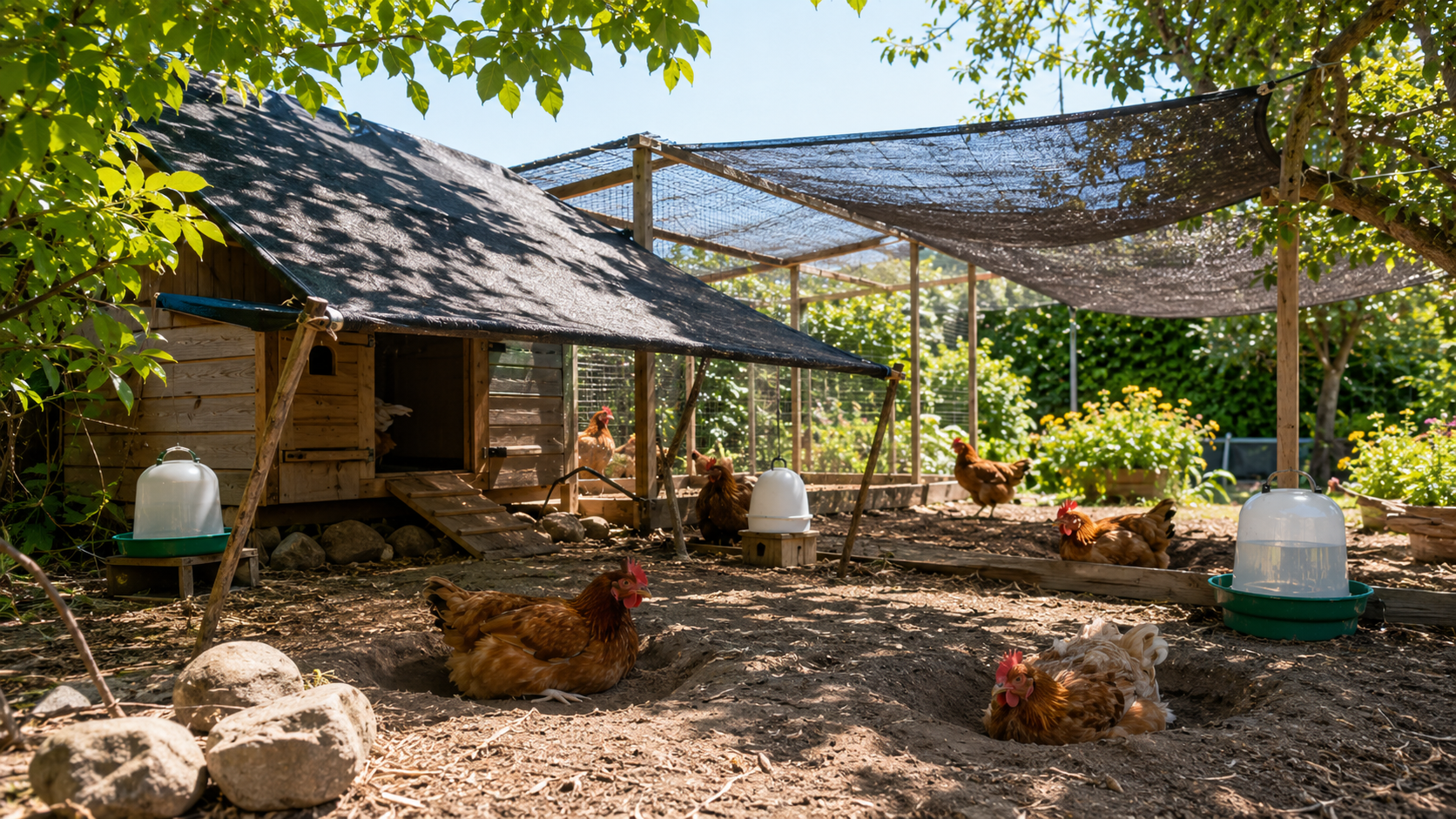
Trees, shrubs and the area beneath a raised coop can provide useful natural shade. Where this is not available, you can use shade cloth, a parasol or a securely fitted tarpaulin above part of the run. Given how often we experience heatwaves in the summer, a good garden shade cloth is an inexpensive but worthwhile investment for your hens.
Keep the sides of your run open wherever possible. Wrapping solid covers around the run may block the sunlight, but it can also restrict airflow and trap warm air inside.
In my experience, checking the shade during the afternoon is far more useful than looking at it first thing in the morning. The position of the sun can leave a run that looked well protected at 9am almost completely exposed by 3pm.
Do not rely on the coop as the only shaded space. It may be darker inside, but just like in your own home, that does not mean it is cooler.
Keep the coop well ventilated
Although temperatures drop at night, a coop will continue to release the heat it absorbed during the day. Keeping the coop in the shade during the day can help keep it cooler at night. A raised cover should be used. Don’t simply drape a sheet over the coop, as this will have little effect and may restrict ventilation and airflow.
Good ventilation is critical as it allows heat and moisture to escape from the coop. It is especially important at night when the hens are roosting close together.
Permanent ventilation openings should remain open throughout the summer. Clean away anything that may restrict the airflow and make sure any additional openings are covered with strong predator-proof mesh.
A fan may help in a large shed or enclosed poultry house, provided it is positioned safely. However, I wouldn’t use one in a typical small backyard coop. Keep cables out of reach, protect electrical connections from moisture and do not use a fan as a substitute for adequate ventilation.
The RSPCA recommends plenty of shade, constant access to clean water and well-ventilated housing during periods of hot weather.
Give hens somewhere cool to rest
Some surfaces are better than others in hot weather. Bare soil in the shade is usually cooler than paving, concrete or artificial surfaces. Soil also enables your chickens to scratch out shallow hollows so they can settle into the cooler earth.
Make sure the flock still has access to a dry dust-bathing area. Dust bathing is a normal behaviour and hens may spend longer doing it when the soil beneath the surface is cool.
You can lightly dampen a separate patch of shaded ground, but avoid soaking the whole run. Excessive water may increase humidity, create mud and make the enclosure unhygienic.
Frozen water bottles placed in shaded resting areas may also help. The hens can sit nearby if they choose, without being forced into direct contact with them.
Adjust feeding during a heatwave
Chickens often eat less when the weather is very hot. Continue to provide their normal nutritionally complete layers feed, but expect them to eat more during the cooler morning and evening periods.
Keep feeders in the shade and remove any feed that has become wet or stale. Do not replace layers pellets with large amounts of fruit, vegetables or other treats.
Cool vegetables can provide occasional enrichment, but they do not replace a balanced diet or fresh drinking water.
More detailed advice about appetite, suitable foods and summer feeding routines is available in What To Feed Chickens In Summer.
Check broody hens and nest boxes
Nest boxes can become some of the warmest places in a coop, particularly if they receive direct sunlight or have limited ventilation.
Collect eggs regularly and check that no hen is spending unnecessary time inside. Broody hens need particular attention because they may remain on the nest rather than leaving to drink and cool down.
Make sure a broody hen has easy access to water and watch for panting, weakness or changes in her normal behaviour.
Check the coop again at bedtime
Do not assume the coop has cooled simply because the evening air feels more comfortable.
Wooden housing can hold heat long after the sun has moved away. Put your head inside before the hens settle and check whether the air feels hot or stagnant. If it does, open every access way (back doors, nesting box lid, etc.) to let the cooler air in and the hot, humid air escape. Don’t forrget to close these before the chickens return.
I also check that all the vents are clear again at dusk. Bedding, feathers and cobwebs can restrict surprisingly small openings, especially in compact wooden coops.
Allow the flock to stay in a secure, shaded run until they are ready to go inside. However, do not leave an unprotected coop door open overnight. Ventilation must not come at the expense of protection from foxes and other predators.
If your coop is movable and there is an evening breeze, consider turning it so the air flows directly through the vents. This will help keep the air fresher inside and provide a more constant airflow to push the warmer air out.
What to do if a chicken overheats
Move the hen calmly into a cool, quiet and well-ventilated area. Keep handling to a minimum and place fresh water within easy reach.
Do not force water into her beak. A weak bird may inhale it into her respiratory system.
Watch her breathing and responsiveness closely. If she does not begin to improve after being moved out of the heat, contact a poultry-friendly vet.
Seek urgent veterinary help if the hen collapses, cannot stand, becomes unresponsive or continues to breathe heavily. Similar symptoms can also be caused by respiratory disease, heart problems and other illnesses, so do not assume that every unwell hen is simply too hot.
Common heatwave mistakes
One drinker may not be enough, particularly in a larger flock. It can be emptied, overturned or guarded by a dominant hen.
Morning shade may not protect the flock in the afternoon. Check the run when the sun is at its strongest.
Covering every side of the run can reduce airflow and trap heat. Provide overhead shade while keeping the enclosure open and well ventilated.
A closed coop is not necessarily cooler than the run. Check the temperature inside before shutting the hens in.
Finally, do not wait for a hen to collapse before acting. Panting is already an indication that she is working to lose excess heat.
Key takeaways
- Provide more than one source of clean water and keep each drinker in the shade
- Make sure every hen has access to shade throughout the afternoon
- Keep coop vents clear and protect all openings with strong mesh
- Avoid handling and other stressful jobs during the hottest part of the day
- Check broody hens, nest boxes and the coop temperature regularly
- Move an overheated hen somewhere cool and contact a vet if she is weak, unresponsive or struggling to breathe
Keeping chickens safe during a heatwave
The best way to keep chickens safe during a heatwave is to prepare before the temperature rises. Fresh water, reliable shade, good ventilation and regular checks will prevent most problems.
Pay attention to panting and changes in behaviour rather than relying only on the temperature shown in the forecast. If a hen becomes weak, collapses or fails to recover after being moved somewhere cooler, seek veterinary advice without delay.
Disclosure: This article contains affiliate links. As an Amazon Associate, I earn from qualifying purchases. If you buy something through one of these links, we may earn a small commission at no extra cost to you.

Kevin O’Hara got his first chickens back in 1972. A backyard chicken keeper based in Yorkshire, he created of KeepingChickens.uk back in 2012. With years of hands-on experience, he shares practical, UK-specific advice to help others care for happy, healthy hens. Learn more about Kevin on the author page.