Vent Gleet In Chickens: Causes, Symptoms And Treatment
Vent gleet in chickens can look worrying, especially if your hen has dirty feathers, discharge, soreness or a strong smell around her back end. It is not something to ignore, but it is also not something to treat by guesswork. In this post, we’ll look at what vent gleet is, how to spot it, what may cause it and when to speak to a poultry vet.
Disclaimer: This article is for general chicken-keeping information only and is not a substitute for veterinary advice. If your hen seems unwell, has discharge, swelling, bleeding, a strong smell around the vent or symptoms that do not quickly improve, contact a poultry vet.
What is vent gleet in chickens?
The vent is the opening under a chicken’s tail. It is where droppings pass out and where eggs are laid. Because the vent has several important jobs, any soreness, swelling, discharge or mess around this area should be checked carefully.
Vent gleet is the name often used when the vent area becomes sore, inflamed, smelly or affected by discharge. It is usually connected to irritation or infection around the vent and the area just inside it. The British Hen Welfare Trust describes vent gleet as a cloacal fungal infection and lists a sticky yellow-white discharge, crusting on dirty tail feathers and a strong smell as common signs.
For most keepers, though, the most important point is simpler: a dirty back end does not always mean vent gleet. Loose droppings, worms, mites, injury, egg-laying problems, digestive upset or damp weather can all make the feathers around the vent look messy.
This is why vent gleet should be treated as a warning sign, not as a complete diagnosis on its own. The aim is to check the hen carefully, keep the area clean, look for other symptoms and get veterinary advice if the problem looks more than mild.
Signs of vent gleet to look for
The first sign is often a hen with dirty, damp or crusted feathers below the vent. You may also notice a pale yellow or white discharge, redness, swelling or a strong, unpleasant smell. The British Hen Welfare Trust lists yellow-white discharge, hard white crusting and strong smell among the key symptoms.
Other signs can include a sore-looking vent, feather loss around the back end, pecking or fussing at the area, a change in laying, or a hen that seems quieter than usual.
One thing that makes vent gleet easy to miss is that a hen may still eat and drink normally at first. She may walk around with the rest of the flock, scratch about and seem more or less herself. That is why it is worth checking hens properly when something looks off, rather than relying only on how they seem from a distance.
If I saw a hen with a messy back end, I would not immediately assume the worst. I would pick her up calmly, look at the feathers and skin around the vent, check whether there is any smell or discharge, and then look at the whole bird. That gives you a much clearer idea of whether it is just a messy feather problem or something that needs attention.
If you are unsure about a hen’s health, read our post: How To Tell If A Chicken Is Sick.
What causes vent gleet?
Vent gleet is often linked with an imbalance around the vent. Yeast, infection, irritation, digestive upset or another underlying health problem may be involved. PoultryDVM explains that vent problems can have several possible causes, including stress, infection, parasites and egg-laying issues, so it is better to look at the full picture rather than assume every case is the same.
In everyday chicken-keeping terms, possible causes or contributing factors include loose droppings, dirty or damp bedding, poor coop hygiene, stress, worms or other parasites, irritation around the vent, egg-laying strain or another health issue that needs checking.
This does not mean every hen with dirty feathers has vent gleet. A hen may simply have loose droppings after a change in feed, during wet weather, or after eating something that has not agreed with her. However, discharge, soreness, swelling or a strong smell suggests something more than ordinary dirt.
If several hens have dirty feathers or loose droppings, look at feed, water, bedding, worms and general flock health. If only one hen has a sore, smelly or swollen vent, she may need individual attention.
A useful first question is this: is it simply dirty feathering, or is there discharge, soreness, swelling or a smell? The answer helps you decide whether you are dealing with a hygiene issue, a digestive problem or something that needs veterinary advice.
Is vent gleet contagious?
Vent gleet is not usually something that spreads through a flock in the same way as a respiratory illness. However, that does not mean you should only check the affected hen and ignore the others.
If one hen has a dirty or sore vent, look at the rest of the flock too. Check whether any other hens have messy feathers, loose droppings, weight loss, pale combs or signs of discomfort. Also look at the coop, bedding, drinkers and feed.
Sometimes the real issue is not that one hen has “passed on” vent gleet, but that several birds are sharing the same problem. Damp bedding, dirty drinkers, stale feed, stress, bullying or poor hygiene can affect more than one hen.
If a cockerel is present, it is also sensible to be cautious. The British Hen Welfare Trust notes that vent gleet can sometimes be linked with a cockerel being present in the flock, and mating can also irritate a sore vent.
You may need to separate the affected hen if she is being pecked, looks unwell or needs closer monitoring. Keep her somewhere dry, calm and well ventilated, where you can check whether she is eating, drinking and passing droppings normally.
What to do if you suspect vent gleet
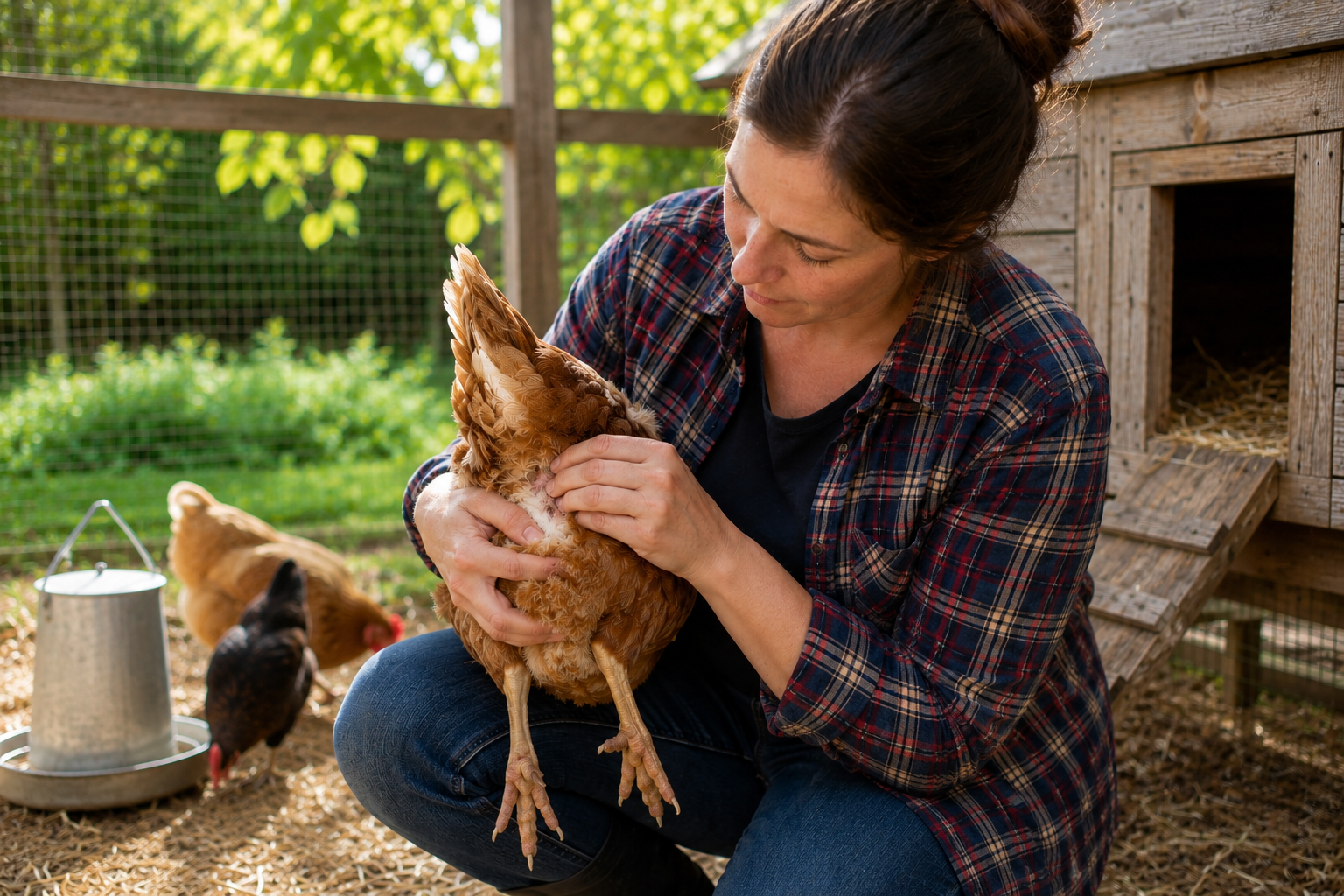
Start by checking the hen properly. Pick her up gently and part the feathers around the vent. Look for discharge, redness, swelling, broken skin, blood, mites, lice, wounds or anything sticking out from the vent.
If there is tissue sticking out from the vent, heavy bleeding, maggots, severe swelling or the hen looks very unwell, treat it as urgent and contact a poultry vet.
Then look at the whole hen, not just the vent. Is her comb bright or pale? Is she standing normally? Is she eating and drinking? Are her droppings normal? Has she stopped laying? Has she recently moulted, been bullied, changed feed or seemed under the weather?
You can also feel her crop, which is the small food pouch at the front of her chest. It is usually fuller in the evening after eating and much emptier first thing in the morning. If it feels full, sour-smelling or squishy in the morning, that may point to a digestive problem.
Safe first steps include:
- moving her to a clean, dry, quiet area if she needs monitoring
- offering normal balanced layers feed and clean fresh water
- removing heavily soiled bedding from the coop
- cleaning the vent area gently if the feathers are dirty
- checking the rest of the flock for similar symptoms
- contacting a poultry vet if there is discharge, swelling, smell, repeated soiling or any sign she is unwell
Do not rely on guesswork if the hen looks poorly. Vent problems can overlap with more serious issues, including egg-laying problems, worms, mites, digestive upset and infection.
How to clean a dirty vent safely
Cleaning the area can help you see what is really going on. It can also make the hen more comfortable if dried droppings or discharge are pulling at the feathers. However, cleaning is not the same as treating the cause.
Use warm water and work gently. Hold the hen securely without squeezing her body. If the feathers are badly matted, soften the dirt first rather than pulling at it. Once the area is clean, dry her thoroughly before she goes back outside, especially in cold or damp weather.
Do not push anything inside the vent. Do not use harsh disinfectants, strong-smelling products or human creams unless a vet has told you to use them. The vent area is delicate, and rough cleaning can make soreness worse.
After cleaning, check what happens next. If the feathers stay clean and the hen seems well, it may have been a temporary dirty-feather issue. If discharge, smell or soreness returns quickly, there is probably an underlying problem.
When to speak to a poultry vet
Speak to a poultry vet if the hen seems unwell, has repeated discharge, smells strongly, has swelling, has blood around the vent, stops eating, loses weight, stops laying suddenly or seems in pain.
You should also get advice if the problem comes back after cleaning or if more than one bird is affected.
A vet may need to check whether the issue is caused by infection, worms, mites, injury, egg-laying trouble or another health problem. This matters because different causes need different treatment.
This is especially important with laying hens. Some treatments mean you cannot eat, sell or give away the eggs for a certain period. This is called an egg withdrawal period. GOV.UK explains that a withdrawal period is the time that must pass after a medicine is given before produce such as eggs can enter the food chain.
In plain English, do not guess with medicines. If your hens lay eggs that people eat, check with a vet before using any treatment and ask whether eggs need to be withheld.
What not to do
Online vent gleet advice can be very mixed. Some of it is useful, but some of it encourages quick home treatment without checking what is really causing the problem.
Do not assume that every dirty back end is vent gleet. Do not use antibiotics without veterinary advice. Do not put harsh disinfectants on or inside the vent. Do not use human creams or treatments unless a vet has confirmed they are suitable for your hen.
Do not leave a wet hen outside after cleaning, especially in cold weather. And do not ignore a bad smell, swelling, blood, repeated discharge or a hen that seems quiet and withdrawn.
It is also worth being cautious with “natural” treatments. Natural does not automatically mean safe, effective or suitable for laying hens. Supportive care is useful, but it should not delay proper treatment if the bird is clearly ill.
How to reduce the risk of vent problems returning
You cannot prevent every case of vent gleet. The British Hen Welfare Trust says there is no guaranteed way to prevent the condition.
Even so, good flock care can reduce some of the problems that make dirty vents, irritation and digestive upset more likely. Keep the coop dry, remove heavily soiled bedding and make sure drinkers are not leaking into the sleeping area. Damp bedding can quickly make a back-end problem worse. For more information on maintaining a hygienic coop, read our post 10 Tips for for saley cleaning a chicken coop.
Feed hygiene matters too. Store layers feed somewhere dry and rodent-proof. Do not use mouldy, damp or stale feed. Keep drinkers clean and refill them regularly, especially in warm weather.
Routine checks are just as important. When you pick up your hens, glance at the vent feathers, body condition, comb colour and feet. You do not need to turn every health check into a major inspection, but you do need to know what normal looks like for each bird.
Stress can also play a part in flock health. Introduce new hens carefully, give birds enough space, watch for bullying and make sure weaker hens can reach food and water. A hen that is already under pressure is often the one that shows problems first.
Common questions about vent gleet in chickens
Can vent gleet clear up on its own?
Mild soiling around the vent may improve once the hen is cleaned and any simple hygiene issue is corrected. However, true vent gleet can involve infection or inflammation. Repeated discharge, smell, swelling or soreness should be checked by a poultry vet.
Is vent gleet the same as diarrhoea?
No. Diarrhoea can make feathers around the vent dirty, but vent gleet usually refers to soreness, inflammation or infection around the vent area. The two can look similar, which is why you need to check the whole hen rather than judging from dirty feathers alone.
Can I eat eggs from a hen with vent gleet?
If the hen has not been given any medicine, the main concern is hygiene and whether she is otherwise healthy. Clean eggs from a bright, untreated hen may be fine, but use common sense. Do not use eggs that are dirty, cracked or contaminated.
If a vet prescribes treatment, always ask whether you need to stop eating, selling or giving away her eggs for a while. Some medicines have egg withdrawal periods, and the vet should tell you what applies. The NOAH Compendium lists withdrawal period information for veterinary medicines, but your vet is the best person to explain what applies to your hen.
Should I isolate a hen with vent gleet?
Isolation can help if she is being pecked, looks unwell or needs close monitoring. Keep her somewhere dry, calm and well ventilated. If she is bright, comfortable and not being bullied, you may not need to remove her from the flock immediately, but you should still monitor her closely.
Can vent gleet come back?
Yes, vent gleet can come back, especially if the underlying cause has not been dealt with. Damp bedding, digestive upset, stress, worms, mites or another health issue may all need checking.
Does a dirty vent always mean vent gleet?
No. Dirty feathers around the vent can be caused by loose droppings, wet weather, parasites, diet changes, stress, egg-laying problems or a hen struggling to keep herself clean. Vent gleet is one possible cause, but it is not the only one.
Is vent gleet painful for chickens?
It can be uncomfortable, especially if the skin around the vent is red, sore, swollen or crusted. Affected hens may peck at the area, stand awkwardly, look hunched or seem quieter than usual.
If the vent looks sore or the hen seems uncomfortable, do not leave it for days to see what happens. Clean the area gently if needed, keep her dry and speak to a poultry vet if symptoms continue or worsen.
Key takeaways
Vent gleet in chickens usually means the vent area is sore, inflamed, smelly or affected by discharge. It can be linked with infection or irritation, but dirty feathers alone do not prove that vent gleet is the problem.
The main signs to watch for are dirty feathers, discharge, soreness, swelling and a strong smell around the vent. Some hens may still eat and drink normally at first, so regular checks are important.
Cleaning the area can help you see what is happening, but it does not treat the underlying cause. If symptoms return, smell strongly or come with signs of illness, speak to a poultry vet.
Avoid guessing with medicines, especially in laying hens. Some treatments may mean you need to stop eating, selling or giving away the eggs for a while.
Good hygiene, dry bedding, clean water, balanced feed and regular flock checks can reduce some of the conditions that make vent problems more likely.
Conclusion
Vent gleet is one of those chicken health problems that can start with something as simple as dirty feathers. The difficulty is knowing whether you are looking at a minor hygiene issue or the early signs of infection, inflammation or another health problem.
The safest approach is to clean the area gently, check the whole hen, review the coop conditions and watch for repeated discharge, smell, swelling or changes in behaviour. If the problem does not settle quickly, or if the hen seems unwell, speak to a poultry vet.
Disclosure: As an Amazon Associate I earn from qualifying purchases. This post may also contain affiliate links from other retailers. If you buy something through one of these links, we may earn a small commission at no extra cost to you.

Kevin O’Hara got his first chickens back in 1972. A backyard chicken keeper based in Yorkshire, he created of KeepingChickens.uk back in 2012. With years of hands-on experience, he shares practical, UK-specific advice to help others care for happy, healthy hens. Learn more about Kevin on the author page.