Best Chicken Waterers UK
Choosing a chicken drinker sounds simple until you see how quickly your hens can fill a perfectly clean trough with mud, bedding and whatever else they have just scratched up.
Over the years, I have used a mix of drinker sizes and designs. I have found that the cleverest-looking option is not always the best. What really matters is whether your drinker stays upright, keeps most of the dirt out and can be cleaned without turning into a fiddly weekly chore.
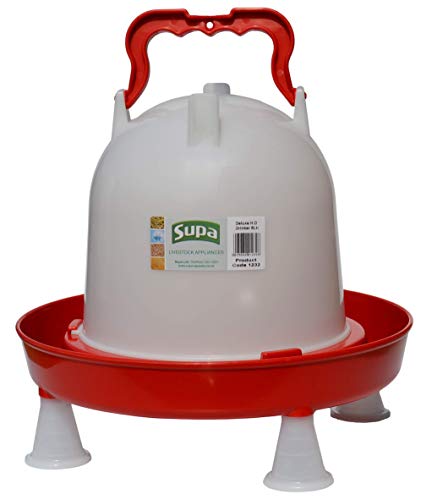
For most small flocks, I would choose a straightforward plastic gravity drinker such as the Supa Deluxe 6L. It is simple, easy to inspect and does not require your hens to learn a new way of drinking.
If dirty water is a constant problem, an enclosed nipple or cup system may suit you better. Larger flocks will usually benefit from a higher-capacity drinker or two separate water points rather than one small trough that dominant hens can guard.
I have not personally tested every exact model featured below. I have chosen them by combining my experience of the main drinker types with current product specifications, ease of cleaning, Amazon customer feedback and the practical problems that matter in a real chicken run.
The best chicken waterers at a glance
| Chicken waterer | Best for | Type | Capacity | Main advantage | Main drawback |
|---|---|---|---|---|---|
| Supa Deluxe Heavy Duty Drinker | Best overall | Plastic gravity drinker | 6 litres | Simple and easy to clean | Needs level positioning |
| Supa Deluxe Large Drinker | Medium flocks | Plastic gravity drinker | 12 litres | Good capacity without being enormous | Heavy when completely full |
| Little Hen Supplies Cup Drinker | Cleaner open water | Automatic cup system | 15 litres | Four automatically refilling cups | Cups still need regular cleaning |
| Little Hen Supplies Nipple Drinker | Preventing contamination | Nipple system | 15 litres | Very little exposed water | Hens may need training |
| Novital Ascott Drinker | Large flocks | Raised gravity drinker | 30 litres | Stable and high-capacity | Awkward to move when filled |
| Omlet Insulated Drinker | Winter and summer | Insulated cup or nipple system | 11 litres | Helps limit algae and slow freezing | Considerably more expensive |
| Parasene Galvanised Drinker | Traditional metal option | Galvanised gravity drinker | 3 gallons | Strong, stable construction | Not suitable for acidic additives |
1. Supa Deluxe 6L Heavy Duty Poultry Drinker
Best chicken waterer for most small flocks
The Supa Deluxe 6L is the model I would choose for a typical back-garden flock of around three to six hens.
It is a traditional gravity drinker, so your hens can see and use it immediately. There are no cups to stick, nipples to leak or valves to adjust. You fill the reservoir, secure the base and turn it into position.
That simplicity is valuable. When you check your hens in the morning, you can see straight away whether the trough is full, dirty or frozen. You are not relying on a hidden valve continuing to work.
The six-litre size is also manageable. Large drinkers sound convenient, but water is heavy. A container that is easy to carry, empty and scrub will often be cleaned more regularly than a huge one that you dread moving.
The Supa can stand on the ground or be suspended by its handle. I would raise it slightly rather than putting it directly on the run surface. This helps stop your hens kicking mud and bedding into the trough.
Its main weakness is shared by most gravity drinkers. It needs to stand level and the base must be fitted securely. If it is tilted or not assembled properly, it can release too much water.
Good for: Three to six hens in a covered or partly covered run
Less suitable for: Large flocks or very uneven ground
2. Supa Deluxe 12L Heavy Duty Poultry Drinker

Best traditional drinker for a medium flock
If you like the simplicity of a gravity drinker but six litres is not enough, the 12-litre Supa Deluxe is the natural step up.
It uses the same straightforward design as the smaller version and can either stand on the ground or be hung by its handle. This makes it a sensible choice if you have a medium-sized flock but do not want the maintenance of automatic cups or nipples.
The extra capacity gives you more breathing room in warm weather, although you should still check the water every day. A large reservoir does not guarantee that the trough has stayed clean, level or unfrozen.
The obvious disadvantage is weight. Twelve litres of water weighs around 12 kilograms before you include the drinker itself. You may find it easier to position the empty container first and fill it with a watering can rather than carrying it across the garden when full.
I would also avoid hanging a fully filled 12-litre drinker from a weak run roof or lightweight mesh. If you suspend it, make sure the fixing can safely support the weight.
Good for: Medium flocks and keepers who prefer a familiar open trough
Less suitable for: Anyone who struggles to lift heavy containers
3. Little Hen Supplies 15L Automatic Cup Drinker

Best automatic cup drinker
This Little Hen Supplies model holds 15 litres and supplies the water through four small cups around the reservoir.
The cups refill automatically as the level drops, so your hens do not need to press a trigger or peck a metal pin. This makes the change from a normal gravity drinker relatively easy.
Cup systems expose much less water than a full circular trough. Your hens can still see and drink from an open surface, but they have less opportunity to stand in it or fill it with bedding.
This is particularly useful if your hens are determined diggers. I have known chickens turn a clean water trough into something resembling brown soup within minutes of being let into a loose run surface.
The trade-off is that the cups themselves still get dirty. Dust, feed and small pieces of bedding can collect in them, so you need to rinse them and check that each float mechanism moves freely.
The manufacturer describes this model as suitable for 10 to 12 adult chickens. I would still provide a second water point for a flock of that size, particularly during hot weather. A spare drinker protects your hens if one container is knocked over or a cup stops working.
The listing says it is not suitable for chicks under 12 weeks old.
Good for: Medium flocks, messy runs and hens that already use open water
Less suitable for: Young chicks and keepers who want a completely enclosed drinking point
4. Little Hen Supplies 15L Nipple Drinker

Best for keeping water clean
A nipple drinker is one of the best ways to stop mud, droppings and bedding getting into your hens’ water. The reservoir remains closed and water is released only when a hen taps the drinking nipple.
This Little Hen Supplies model combines a 15-litre container with horizontal nipples positioned around the lower part of the reservoir.
The main benefit is cleanliness. There is no open trough for your hens to stand in and very little water is wasted when the nipples are working correctly.
The downside is that chickens need to understand how to use it. Many work it out quickly, particularly when they see droplets on the nipples, but you should never remove their familiar drinker until you have personally watched every hen drinking from the new system.
This is especially important with shy hens. The most confident birds may learn immediately while a lower-ranking hen hangs back and becomes dehydrated without you noticing.
Nipples also need checking. A blocked or frozen nipple can look perfectly normal from the outside. Press each one during your daily rounds and make sure water is released.
I would choose this over the cup version when contamination is your biggest problem. I would choose cups if you want the easier transition from a conventional trough.
Good for: Keeping water enclosed and runs with lots of loose bedding
Less suitable for: Hens that have never used nipples unless you can supervise the change
5. Novital Ascott 30L Poultry Drinker

Best chicken waterer for a large flock
The Novital Ascott is the largest drinker in this guide, with a 30-litre reservoir mounted above a raised circular drinking tray.
Its wide feet give it a stable base and the tray sits above ground level. That should help reduce the amount of soil and bedding your hens kick into the water, although it will not keep the trough completely clean.
This is a much better fit for a larger permanent run than a small back garden with three hens. Once filled, it will weigh more than 30 kilograms and stand around 70cm tall.
You will need to think about where it will live before filling it. Ideally, put it on a firm, level surface under cover and use a hose or watering can to refill it in position.
Its size does not mean you can leave it unattended for days. Check the trough and water flow daily. A large container can still be contaminated, knocked out of level or affected by algae.
For a large flock, I would usually prefer two water points rather than relying entirely on one 30-litre drinker. That gives lower-ranking hens somewhere else to drink and provides backup if one supply fails.
Good for: Large flocks and permanent, level runs
Less suitable for: Small flocks, mobile runs or anyone who needs to move the drinker frequently
6. Omlet Insulated Chicken Drinker 11L

Best winter chicken drinker
The Omlet Insulated Chicken Drinker is the premium choice in this guide. It is designed to reduce several of the problems that affect ordinary plastic drinkers, including algae, warm water in summer and rapid freezing in winter.
The water is held inside an insulated, opaque reservoir. Your hens can drink through the included cups or nipples, depending on which system works best for your flock.
Blocking light from the water helps slow algae growth, while the insulation is intended to keep the contents cooler in summer and delay freezing during cold weather.
The important word is delay. An insulated drinker is not the same as a permanently heated supply. You must still check it during freezing conditions and make sure the cups or nipples have not iced over.
Its biggest drawback is the price. You are paying considerably more than you would for a standard gravity drinker.
I think it makes most sense if you have already struggled with freezing, algae or constant contamination. If your ordinary drinker stays clean beneath a covered run, you may not gain enough to justify the cost.
Good for: Exposed runs, algae problems and keepers who want better seasonal protection
Less suitable for: Anyone who only needs a simple, inexpensive drinker
7. Parasene 3-Gallon Galvanised Chicken Drinker
Best galvanised chicken drinker
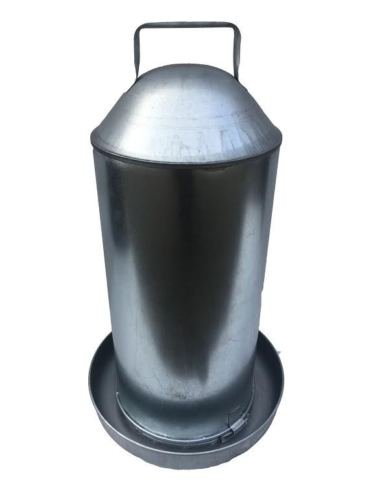
Plastic is convenient, but a well-made galvanised drinker has a reassuringly solid feel and is less likely to crack when handled in cold weather.
This Parasene drinker holds three gallons, which is roughly 13.6 litres. It uses a traditional gravity-fed trough, so your hens should recognise it immediately.
The extra weight and metal construction can help it remain stable, although it still needs firm, level ground. Galvanised drinkers are also less affected by sunlight than clear or translucent plastic containers, which can help reduce algae.
However, metal is not automatically better.
Galvanised drinkers can be awkward to inspect because you cannot see the water level through the reservoir. They can also become hot if left in direct summer sun.
Most importantly, you should not use acidic additives such as apple cider vinegar in a galvanised drinker. Acidic liquids can react with and corrode the metal. Use a suitable plastic container whenever you add an approved treatment or supplement to the water.
Good for: Keepers who want a strong, traditional gravity drinker
Less suitable for: Water containing acidic supplements or exposed sunny positions
Which type of chicken waterer should you choose?
There is no single design that suits every flock. Your best choice depends on how many hens you keep, where the drinker will stand and what is going wrong with your current setup.
Traditional gravity drinkers
A gravity drinker has a reservoir above a shallow trough. As your hens drink, more water flows down to maintain the level.
This is usually the best starting point for a small flock because it is:
- Easy for chickens to recognise
- Simple to inspect
- Widely available
- Relatively inexpensive
- Easy to dismantle
The main problem is contamination. Your hens can kick mud, bedding and feed into the open trough.
Raise the drinker to around the height of your hens’ backs, while making sure they can still reach it comfortably. A level paving slab or purpose-made stand often works better than placing it on loose soil.
Plastic or galvanised?
Plastic drinkers are light, easy to carry and suitable for most supplements. You can also see the water level through some translucent models.
Their weaknesses are sunlight and age. Cheaper plastic may become brittle, fade or crack after repeated exposure to frost and UV light.
Galvanised drinkers are heavier and can last for years when properly cared for. They are a good choice when stability and toughness matter.
However, you cannot use acidic products in them and they should not be left where the metal will become hot in full sunshine.
For most back-garden keepers, I think a strong plastic drinker offers the best combination of price, weight and ease of cleaning.
Nipple drinkers
A nipple drinker releases a small amount of water when your hen taps the metal mechanism.
It keeps the water almost completely enclosed and can greatly reduce contamination. It also stops hens standing in the trough or spilling water across the run.
The disadvantages are:
- Your hens need to learn how to use it
- Each nipple must be tested regularly
- Nipples can freeze before the main reservoir
- Mineral deposits can affect the mechanism
- It is harder to judge drinking activity at a glance
Keep the old drinker available until every bird is confidently using the nipples.
Automatic cup drinkers
Cup drinkers offer a compromise between an open trough and a nipple system.
Your hens drink from small cups, while a valve or float automatically replaces the water. They normally require less training than nipples because the water remains visible.
They keep most of the reservoir clean but do not eliminate daily maintenance. The cups can still collect dirt and should be emptied and rinsed regularly.
Mains-fed automatic waterers
A true automatic system connects to a water supply or larger tank and uses a float valve to maintain the level.
These systems can work well for large flocks, but a poor connection or faulty valve can either cut off the water or flood the run. Outdoor pipework also needs protection from frost.
I have not selected a mains-fed model as one of the best chicken waterers here. The products currently available through Amazon UK vary considerably in quality and replacement parts can be difficult to identify.
For most home keepers, a large reservoir with cups or nipples is easier to supervise and maintain.
What size chicken drinker do you need?
Do not choose capacity purely by how many days the seller claims it will last.
Your hens will drink more during hot weather. Spillage, evaporation, leaks and wild birds can also empty a drinker faster than expected.
As a practical guide:
- Three or four hens: A 3 to 6-litre drinker can work well with daily checks.
- Five to eight hens: Look at capacities of around 6 to 15 litres.
- Nine to twelve hens: A 12 to 20-litre drinker or two smaller water points is more sensible.
- Larger flocks: Consider a 20 to 30-litre drinker, but still provide more than one place to drink.
These are not maximum flock limits. They are starting points based on practical capacity and access.
Two medium-sized drinkers are often more useful than one enormous one. They are easier to carry and clean, while also preventing a dominant hen from controlling the only water source.
How to keep your chickens’ water clean
Even the best chicken waterer will become dirty if it is placed badly or rarely cleaned.
Raise it off the run floor
Put a traditional drinker on a stable block, stand or paving slab.
The trough should be high enough to avoid most scratching debris but low enough for your smallest hen to drink comfortably.
Do not balance it on loose bricks or anything that could tip.
Keep it away from perches
Never put a drinker directly beneath a perch or anywhere your hens regularly roost. Droppings will contaminate the water very quickly.
A domed or steeply sloping lid can also discourage hens from sitting on top of the reservoir.
Place it in the shade
Direct sunlight warms the water and encourages algae.
Use a covered part of the run during summer, but make sure the drinker remains easy for every hen to find.
Clean the parts you cannot immediately see
A reservoir can look clean from the outside while developing a slippery film inside.
Take the drinker apart and scrub the reservoir, trough, seals, cups and nipples. A bottle brush is useful for narrow sections.
Rinse everything thoroughly before refilling it.
Check it every day
A large capacity is not an excuse to ignore the drinker.
During my morning check, I look at the water level, cleanliness, stability and whether every outlet is working. This takes very little time and can prevent a much bigger problem later.
Chickens need constant access to clean, fresh water. The RSPCA also advises cleaning drinkers regularly and removing ice during winter.
How often should you clean a chicken drinker?
Empty and refresh open drinking water daily, particularly if you can see dirt, feed or droppings in it.
Give the whole drinker a proper scrub at least once a week. In warm weather, or when algae is developing, you may need to do this more often.
Cups and open troughs should be rinsed whenever they are visibly dirty. Nipple systems need less surface cleaning, but the reservoir and individual nipples still require regular checks.
I would rather use a six-litre drinker that gets washed frequently than a 30-litre one that is left until it smells or turns green.
How to stop a chicken drinker freezing
Frozen water can become a problem surprisingly quickly during a cold UK morning.
The simplest solution is to keep two drinkers and rotate them. Bring the frozen one indoors to thaw while you put out the spare.
You can also:
- Position the drinker in a sheltered part of the run
- Put it out with slightly warm, not boiling, water
- Use an insulated drinker
- Check nipples and cups as well as the reservoir
- Refresh the water more than once during severe frost
The British Hen Welfare Trust suggests putting drinkers under cover at night and returning them to the run in the morning.
I have not recommended a plug-in heated drinker. Electrical products used around outdoor water, animals and wet ground need careful installation, weather protection and suitable circuit protection. For most small flocks, rotating two drinkers is simpler and safer.
Read Feeding Chickens In Winter for more practical cold-weather advice.
Should you put the drinker inside the coop?
In most cases, I prefer to keep the main drinker in the run rather than inside the sleeping area.
Spilled water makes bedding damp, increases humidity and creates more cleaning. Your hens generally do not need to drink while they are asleep.
The drinker should be available as soon as they leave the coop in the morning.
An exception may be a large, well-ventilated poultry house where the drinking area is deliberately separated from the bedding and roosts. For an ordinary garden coop, an accessible covered area in the run is usually better.
Should you provide a second drinker?
Yes, particularly if:
- You have a larger flock
- Some hens are being bullied
- The weather is very hot
- You use nipples or automatic cups
- You are changing to a new drinking system
- Your drinker has previously leaked or tipped
- Someone else is caring for your flock
A second water point is not unnecessary duplication. It is insurance against a blocked nipple, contaminated trough or dominant hen.
It is particularly important when you are away. See How To Look After Your Chickens When On Holiday for a fuller preparation checklist.
Frequently asked questions
What is the best chicken waterer for a small flock?
For three to six hens, I would choose the Supa Deluxe 6L or another good-quality gravity drinker of a similar size.
It is simple to use, easy to monitor and light enough to carry and clean regularly.
Are nipple drinkers good for chickens?
Yes. Nipple drinkers can keep water much cleaner than an open trough.
You must train your hens to use them, test every nipple daily and provide familiar water until you know the whole flock has made the change.
Are cup drinkers better than nipples?
Cups are usually easier for hens to understand because they can see the water. Nipples keep the water more enclosed and tend to create less mess.
Choose cups for an easier transition and nipples when preventing contamination is your main concern.
Are galvanised drinkers better than plastic?
Galvanised drinkers are strong and stable, while plastic drinkers are lighter and easier to carry.
Plastic is normally the more flexible option because it can be used with suitable water supplements. Acidic additives should not be placed in galvanised metal.
How do you stop algae growing in a chicken drinker?
Keep the drinker in the shade, use an opaque reservoir and clean it regularly.
Do not simply add chemicals to hide an algae problem. Empty the drinker, scrub away the slippery film and rinse it before refilling.
How often should chickens receive fresh water?
Your hens should have access to clean, fresh water every day.
Check the supply at least once daily and more frequently in hot or freezing weather. Replace it immediately whenever it becomes dirty.
Can you leave a large waterer for several days?
A large capacity reduces refilling, but it does not remove the need for daily inspection.
Water can become contaminated, a drinker can leak and a valve can stop working. Check it every day even when the reservoir still looks full.
Final thoughts
The best chicken waterer is not necessarily the largest, most automatic or most expensive.
For a small flock, a sturdy six-litre gravity drinker may be all you need. If your hens constantly fill the trough with dirt, move to cups or nipples. If you keep a large flock, increase the capacity but provide more than one drinking point.
Whichever design you choose, make sure it is easy for you to clean. A complicated drinker that gets neglected is no improvement over a basic one that you empty, scrub and refill regularly.
Personally, I would start with the simplest system that solves your problem. Good positioning and daily checks often make more difference than buying a drinker with a long list of novelty features.
Affiliate disclosure: This article contains affiliate links. As an Amazon Associate I earn from qualifying purchases. If you buy something through one of these links, I may receive a small commission at no extra cost to you.

Kevin O’Hara got his first chickens back in 1972. A backyard chicken keeper based in Yorkshire, he created of KeepingChickens.uk back in 2012. With years of hands-on experience, he shares practical, UK-specific advice to help others care for happy, healthy hens. Learn more about Kevin on the author page.